

Tiny Particles Get Protective Shells with Moving “Windows”
Scientists tracked how tiny particles change during a chemical reaction. Protective shells formed around them with openings that changed position.
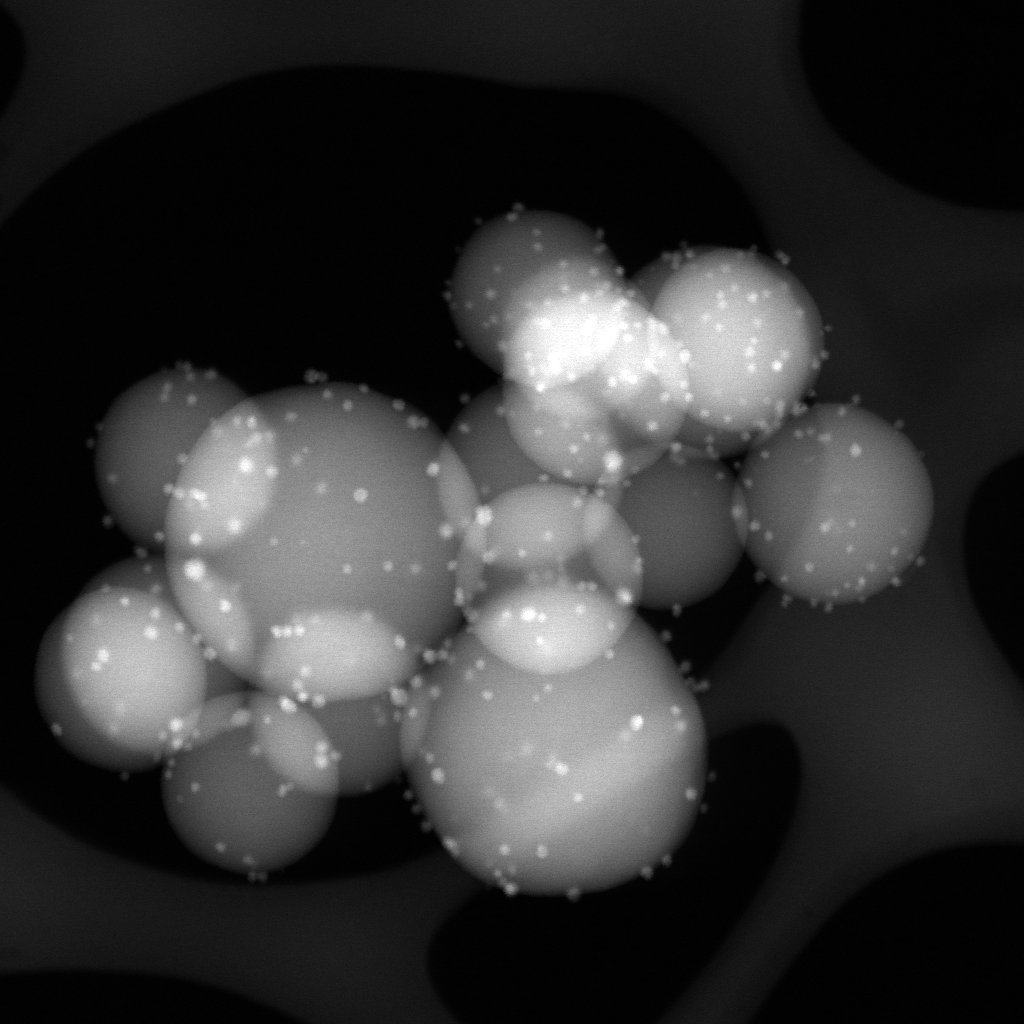
Photo: Luca Silvioli, CC BY-SA, Wikimedia Commons
Researchers at the Universities of Nottingham and Cardiff, together with colleagues from the United Kingdom, tracked the lives of tiny metal particles. These particles are called : they measure billionths of a meter. They were part of a catalyst—a substance that helps a chemical reaction happen faster. The work was published in the journal ACS Nano.
The scientists observed the same particles at three stages: before preparation for use, after treatment with gas, and after the reaction. The particles did not stay still. They moved, turned, merged with one another, grew, and shrank. During preparation, about half of the visible particles disappeared as they moved and merged with their neighbors.
During the reaction, the substance supporting the metal particles formed extremely thin shells around them. Tiny openings appeared in these shells—smaller than a billionth of a meter. And these “windows” did not stay in one place: their positions changed as the reaction went on.
The shells kept the particles from moving around and colliding. This helped preserve the catalyst’s structure. At the same time, substances taking part in the reaction could reach the metal particles through the openings. This provided protection without completely blocking access. According to the researchers, the discovery could help create more efficient, longer-lasting catalysts for fuel production and other industrial processes.
Related lessons
Sources
- Наночастицы создают защитные оболочки с крошечными «окнами» — Phys.org (Retold with a link)
- Catalyst nanoparticles.jpg — Luca Silvioli (CC BY-SA)


 I’m offended. Let’s talk tomorrow.