

Carbon Nanodots Change Their Glow Color and Help Hide Information
Scientists have created tiny carbon particles that glow in different colors. The color can be changed using the liquid, its acidity, and the number of particles.
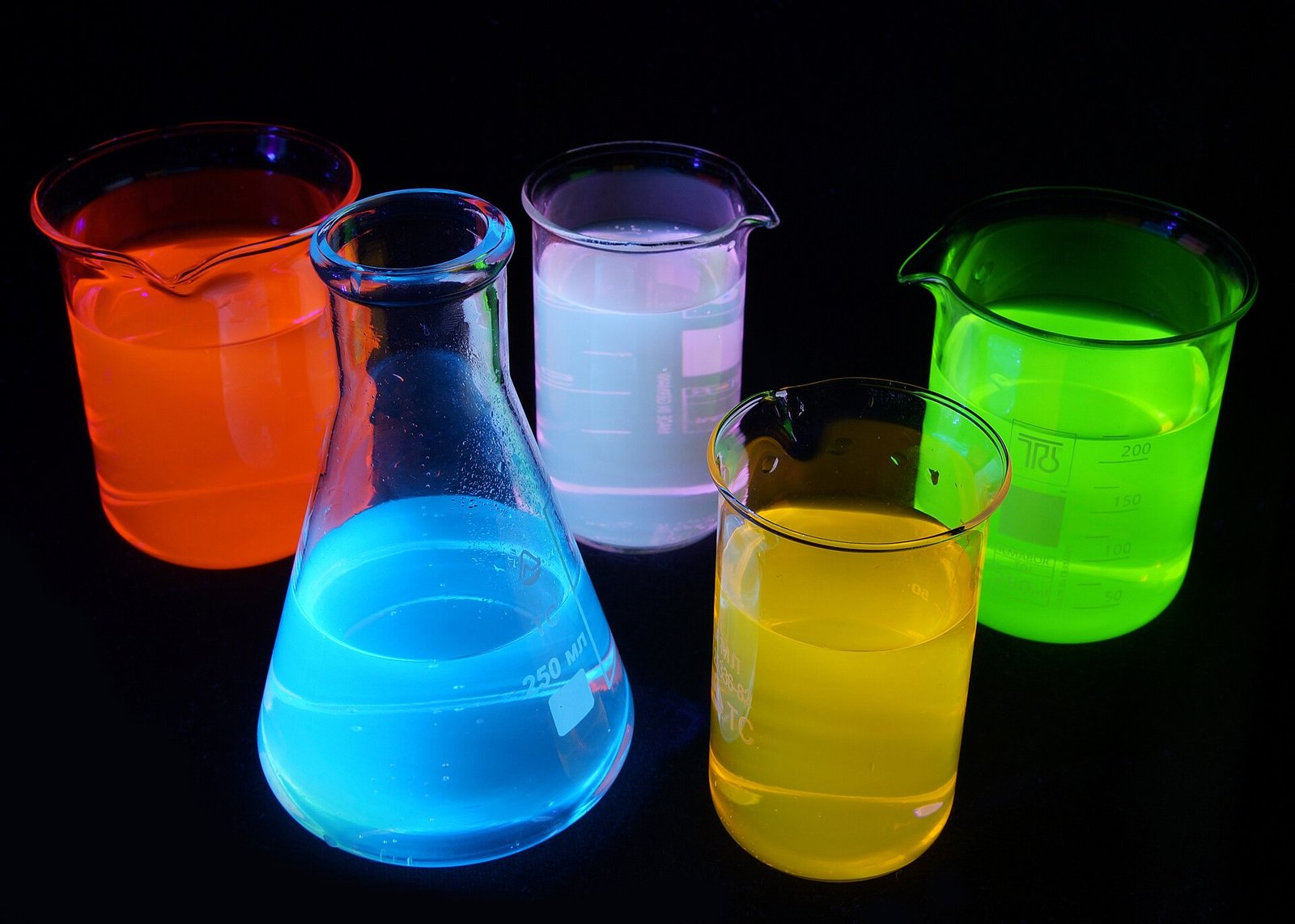
Photo: Maxim Bilovitskiy, CC BY-SA, Wikimedia Commons
Researchers made two types of carbon nanodots—a name for very small particles made of carbon. Under ultraviolet light, they glow in different colors, from blue to red. Ultraviolet light is radiation that is invisible to the human eye. The glow color depends on which liquid the particles are in, how acidic it is, and how many particles have been added to it.
In experiments, one type of nanodot glowed red in acidic water and green in alkaline water. When the researchers changed the water’s acidity again, the color switched back. They were able to repeat this several times, and the glow stayed just as bright. This showed that the color can be switched, rather than set just once when the particles are made.
The nanodots were then mixed with other materials. This produced materials that glowed in four colors: blue, green, yellow, and red. The researchers used them to make decorative objects and flexible films. The films could be folded into different shapes.
The scientists also created an experimental system for secretly recording information. In this system, information is encoded using a combination of lighting, liquid, and its acidity. Possible uses for such a system include protecting information and preventing counterfeiting. So far, the study has demonstrated only an experimental version.
Related lessons
Sources
- Углеродные наноточки меняют цвет свечения — Nanowerk (Retold with a link)
- Fluorescence rainbow.JPG — Maxim Bilovitskiy (CC BY-SA)


 I’m offended. Let’s talk tomorrow.